Emotional Furniture Index
Emotional Furniture Index
A design research framework exploring how furniture communicates emotion through form alone (2025)
AREAS OF INVESTIGATION
AREAS OF INVESTIGATION
Design Research & Analysis
Design Research & Analysis
Product Form Development
Product Form Development
Prototyping Systems
Prototyping Systems
Insight Synthesis
Insight Synthesis
Project Overview
Project Overview
The Emotional Furniture Index (EFI) is a design research framework that investigates how anthropomorphic form in furniture can evoke specific emotional responses—independent of material, color, or finish.
The Emotional Furniture Index (EFI) is a design research framework that investigates how anthropomorphic form in furniture can evoke specific emotional responses—independent of material, color, or finish.
The Emotional Furniture Index (EFI) is a design research framework that investigates how anthropomorphic form in furniture can evoke specific emotional responses—independent of material, color, or finish.
By isolating posture, angle, and gesture as primary variables, the project reframes furniture not as neutral infrastructure, but as an emotionally legible presence that mirrors human states such as curiosity, anxiety, or sadness.
By isolating posture, angle, and gesture as primary variables, the project reframes furniture not as neutral infrastructure, but as an emotionally legible presence that mirrors human states such as curiosity, anxiety, or sadness.
By isolating posture, angle, and gesture as primary variables, the project reframes furniture not as neutral infrastructure, but as an emotionally legible presence that mirrors human states such as curiosity, anxiety, or sadness.
Rather than producing a single “final” object, this work develops a repeatable system designers can use to reason about emotional impact earlier in the design process.
Rather than producing a single “final” object, this work develops a repeatable system designers can use to reason about emotional impact earlier in the design process.
Rather than producing a single “final” object, this work develops a repeatable system designers can use to reason about emotional impact earlier in the design process.
Design Question
Design Question
Can Form Alone Communicate Emotion?
Can Form Alone Communicate Emotion?
Can Form Alone Communicate Emotion?
Furniture shapes how we sit, move, and feel—yet emotional response is rarely treated as a measurable design input.
Furniture shapes how we sit, move, and feel—yet emotional response is rarely treated as a measurable design input.
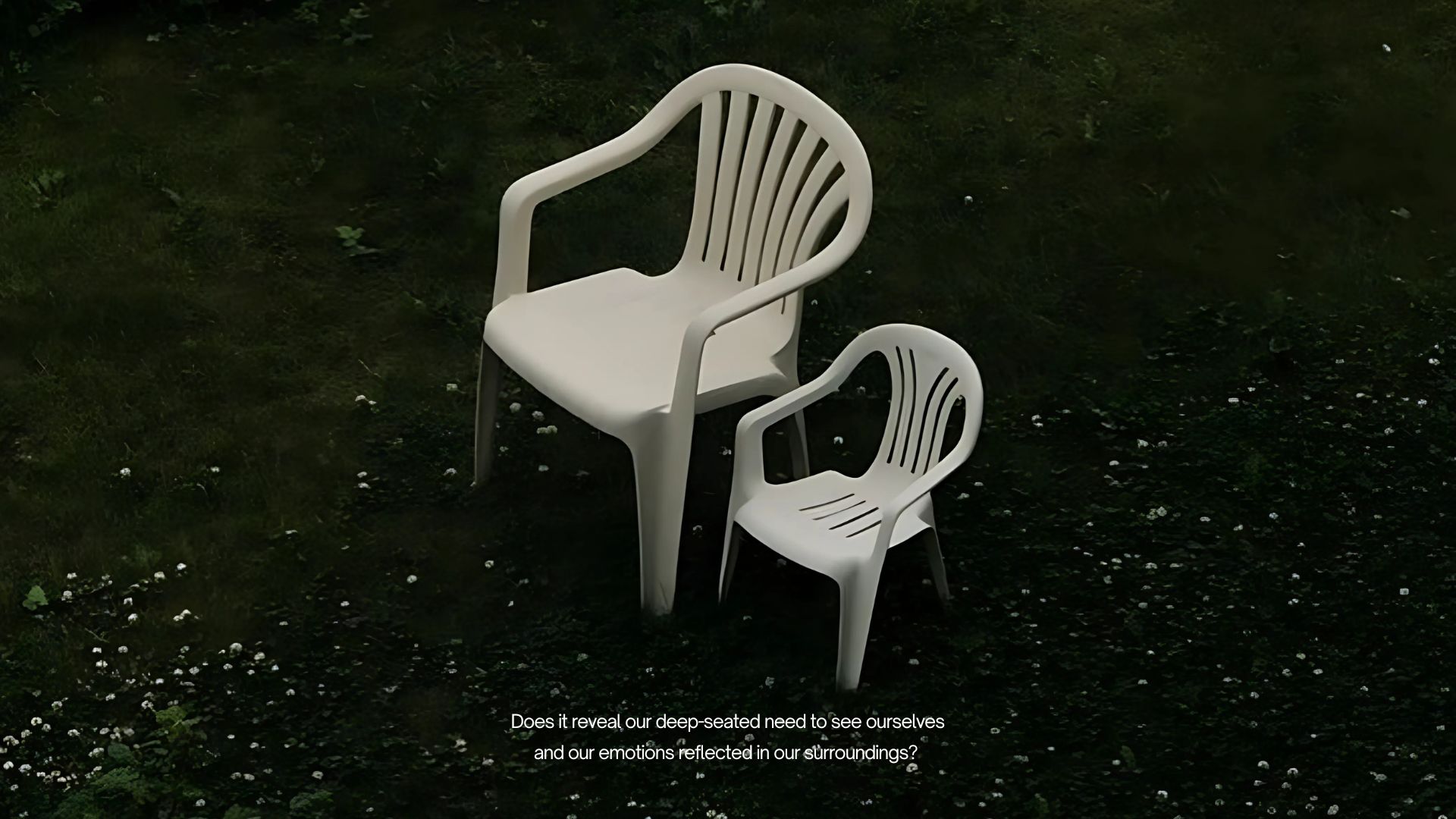
This project began with a simple question:
If a chair can look lonely or a table can seem expectant, is it the furniture that holds these feelings, or is it us?
This project began with a question:
If a chair can look lonely or a table can seem expectant, is it the furniture that holds these feelings, or is it us?
The inquiry builds on earlier explorations into anthropomorphism and body– object relationships, where subtle shifts in posture made otherwise ordinary objects feel expressive, unsettling, or alive.
The inquiry builds on earlier explorations into anthropomorphism and body– object relationships, where subtle shifts in posture made otherwise ordinary objects feel expressive, unsettling, or alive.
Gesture as Foundation
Gesture as Foundation
Using the Human Body as the Baseline
Using the Human Body as the Baseline
Using the Human Body as the Baseline
The study begins with the human body.
The study begins with the human body.
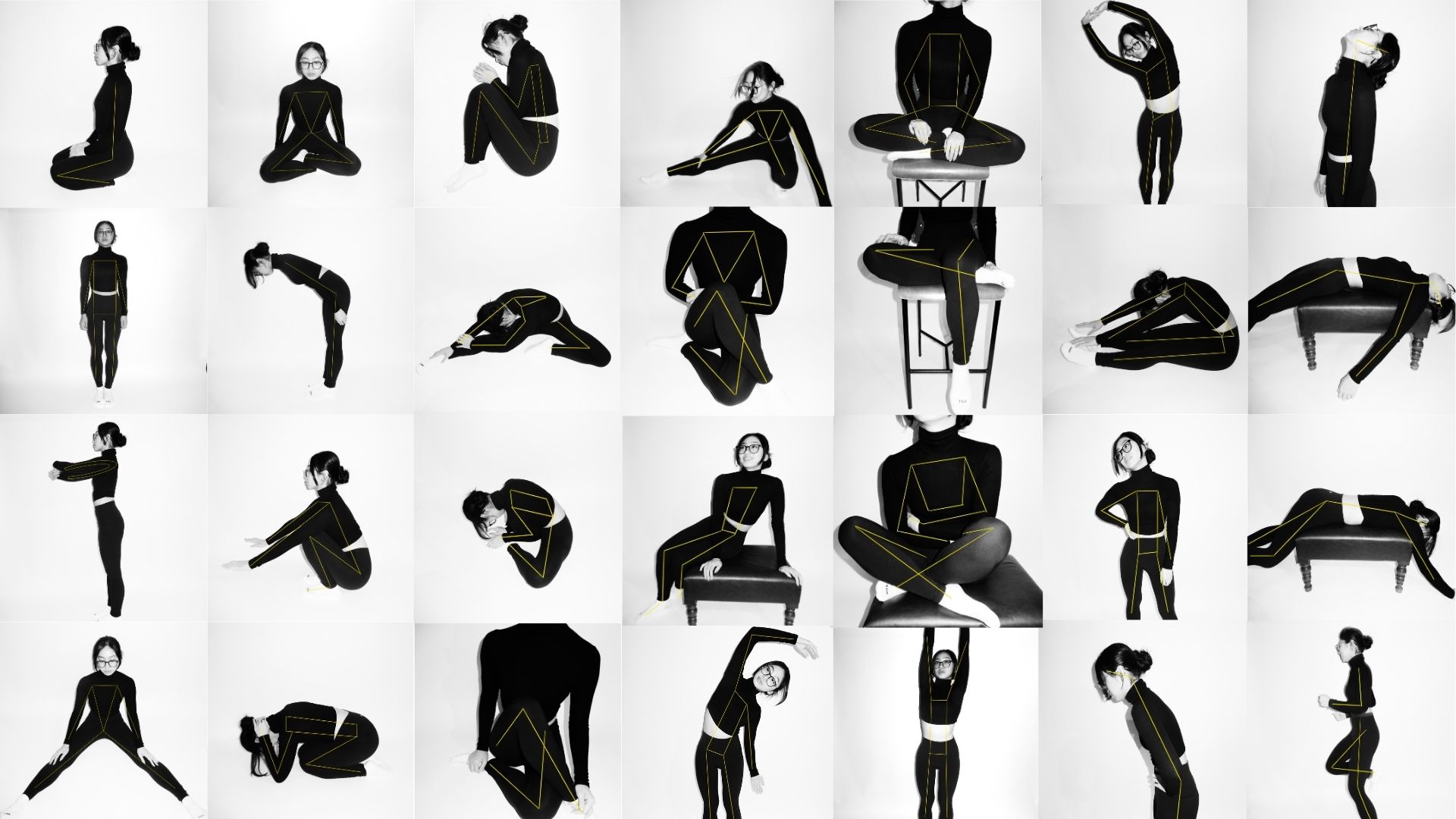
A series of photographed gesture studies documented bodily positions stripped of context—slouched, compressed, extended, collapsed, balanced. These poses were not treated as performance or expression, but as structural signals: tilt, tension, asymmetry, reach, and weight distribution.
A series of photographed gesture studies documented bodily positions stripped of context—slouched, compressed, extended, collapsed, balanced. These poses were not treated as performance or expression, but as structural signals: tilt, tension, asymmetry, reach, and weight distribution.
Much like furniture, the body communicates emotion through posture before any interaction occurs. A collapsed spine reads as withdrawn. An upright stance feels alert. A tilted head suggests curiosity. These cues became the foundation for translating emotional legibility into object form.
Much like furniture, the body communicates emotion through posture before any interaction occurs. A collapsed spine reads as withdrawn. An upright stance feels alert. A tilted head suggests curiosity. These cues became the foundation for translating emotional legibility into object form.
System Design
System Design
A Modular Approach to Rapid Form Testing
A Modular Approach to Rapid Form Testing
A Modular Approach to Rapid Form Testing
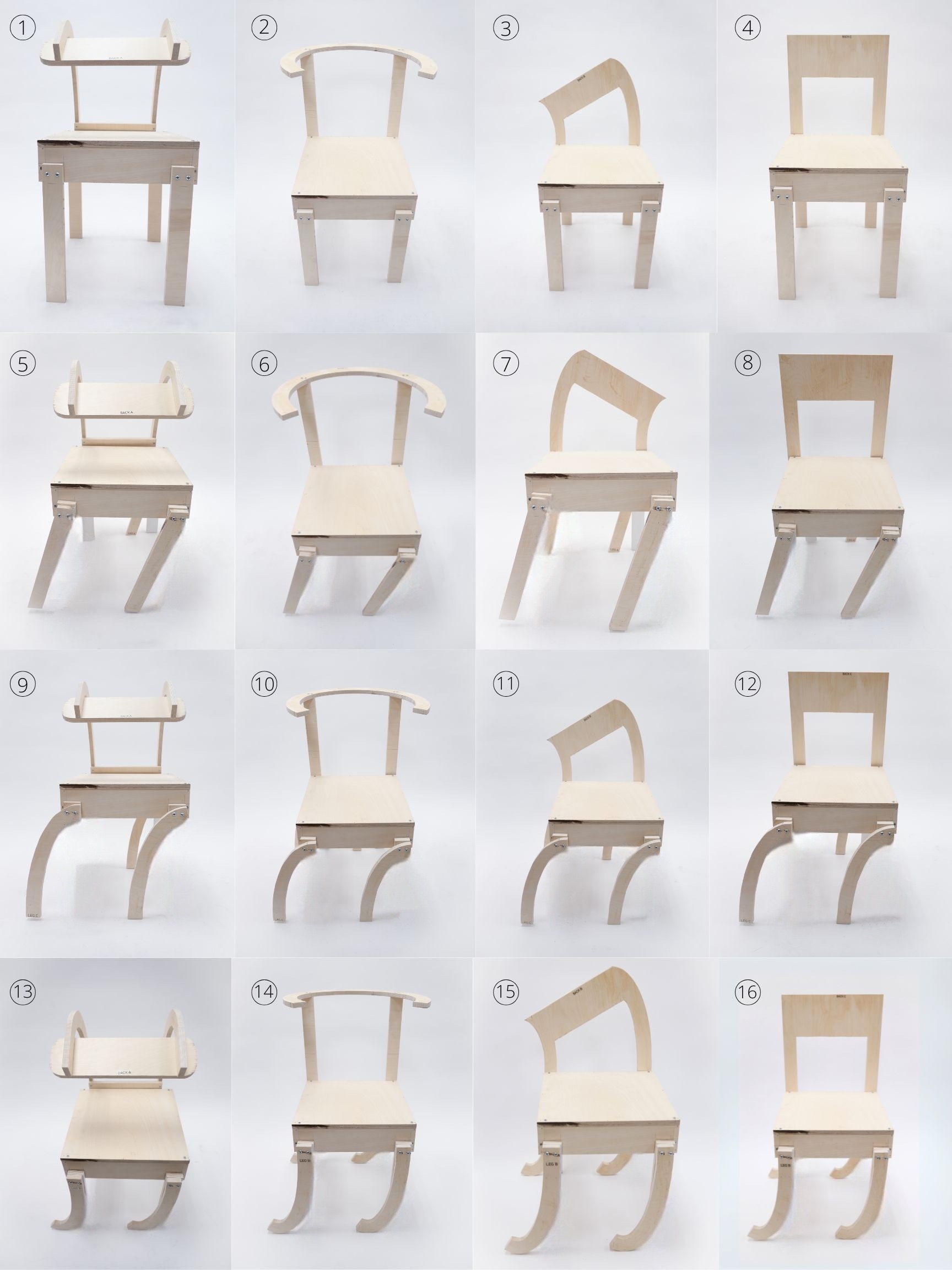
To test these ideas efficiently, I designed a modular chair system that allowed rapid recombination of form without fabricating entirely new objects.
To test these ideas efficiently, I designed a modular chair system that allowed rapid recombination of form without fabricating entirely new objects.
The system consisted of:
The system consisted of:
One plywood seat with embedded T-nuts
Four interchangeable backs
Four interchangeable leg sets
One plywood seat with embedded T-nuts
Four interchangeable backs
Four interchangeable leg sets
This resulted in 16 total configurations, enabling controlled variation of posture, balance, and gesture across a consistent structural baseline.
This resulted in 16 total configurations, enabling controlled variation of posture, balance, and gesture across a consistent structural baseline.
User Testing
User Testing
Mapping Emotional Response
Mapping Emotional Response
Mapping Emotional Response
Mapping emotional response through observation and use
Mapping emotional response through observation and use
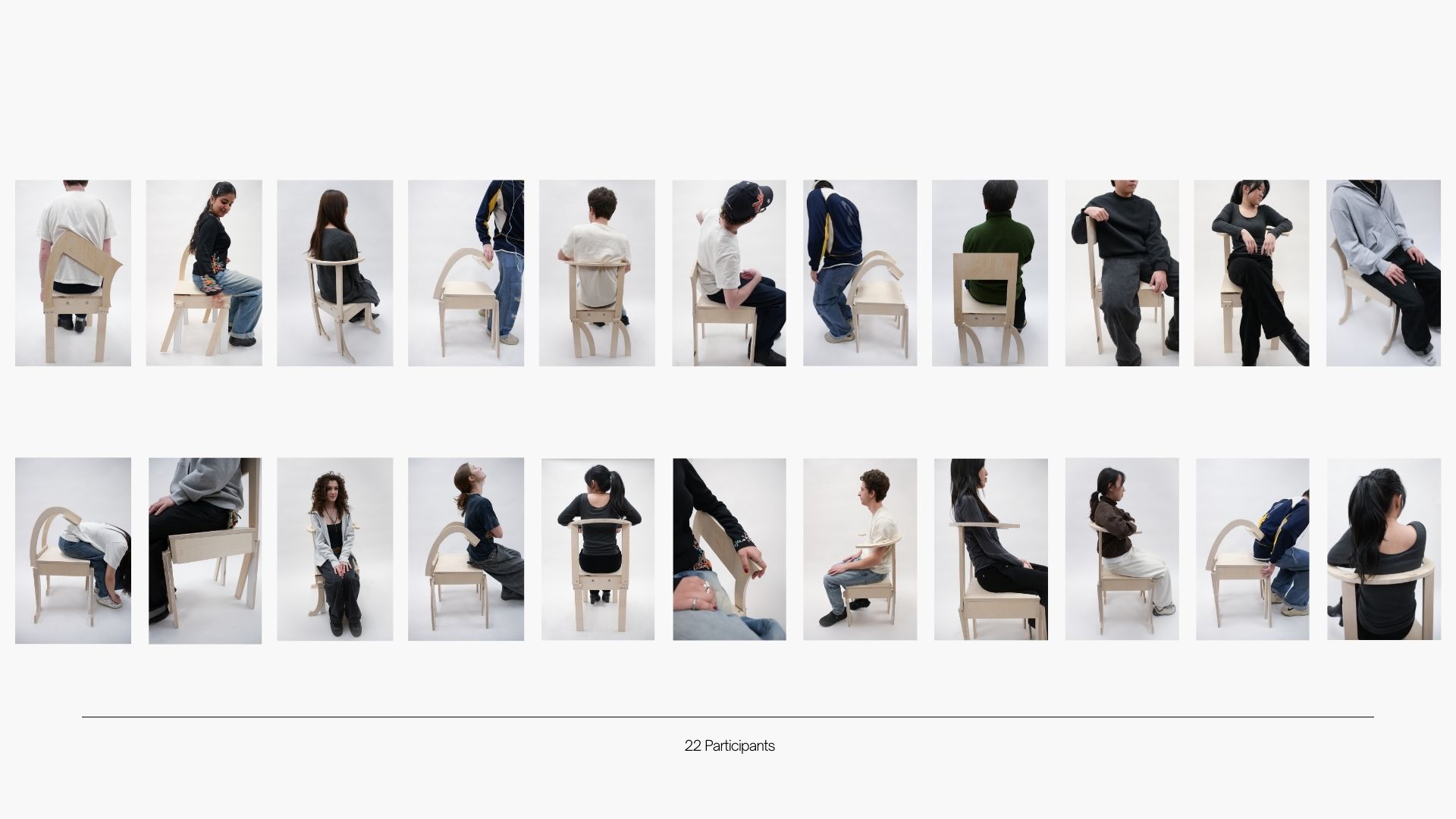
22 participants
Each participant evaluated a randomized subset of chair configurations
Emotional responses were recorded through structured surveys following observation and use
22 participants
Each participant evaluated a randomized subset of chair configurations
Emotional responses were recorded through structured surveys following observation and use
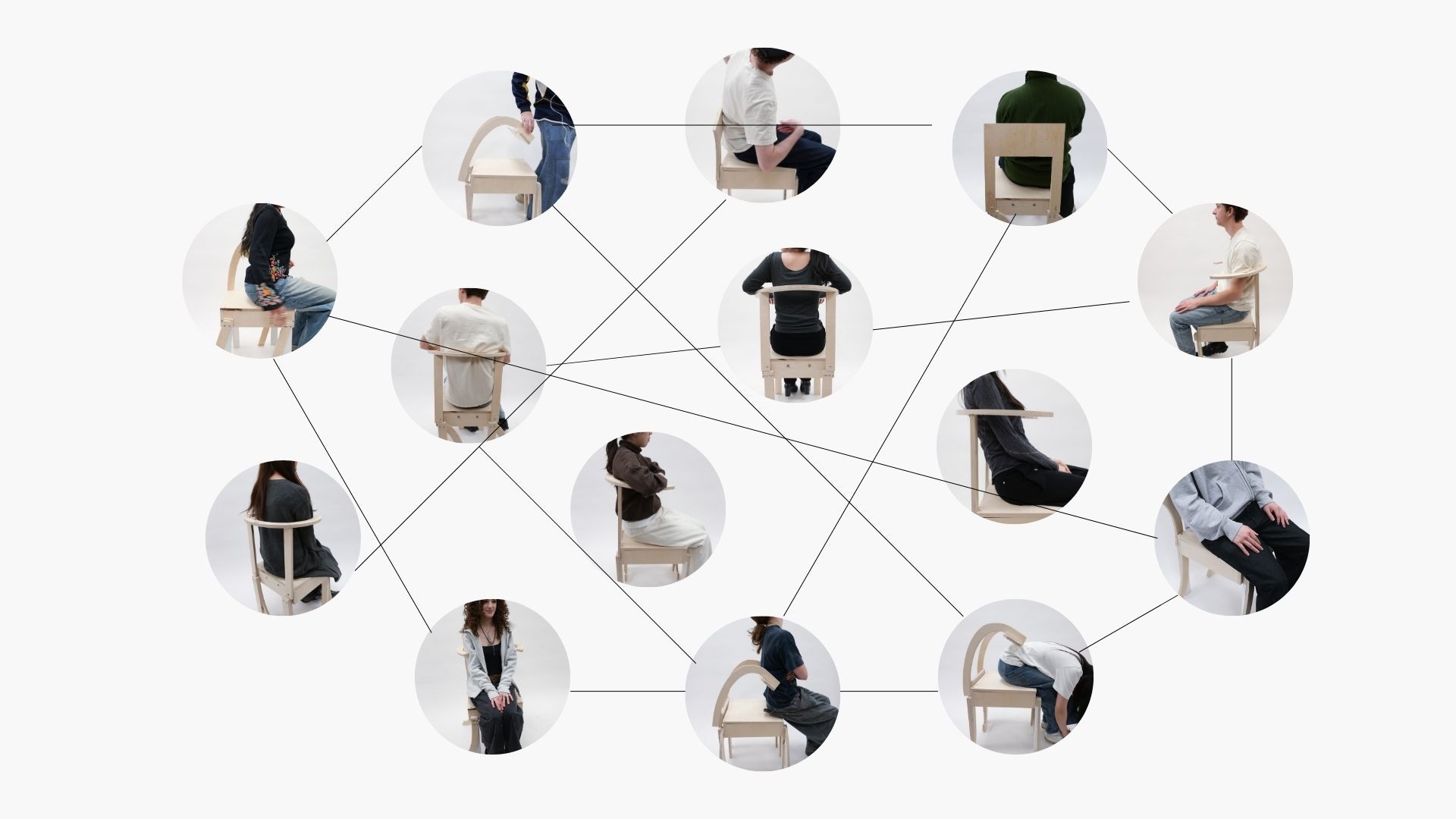
Participants categorized each chair across eight emotional states. Responses were aggregated to identify patterns linking specific formal cues to dominant emotional readings.
Participants categorized each chair across eight emotional states. Responses were aggregated to identify patterns linking specific formal cues to dominant emotional readings.
Key Findings
Key Findings
How Posture and Angle Shape Perception
How Posture and Angle Shape Perception
How Posture and Angle Shape Perception
Several strong trends emerged:
Several strong trends emerged:
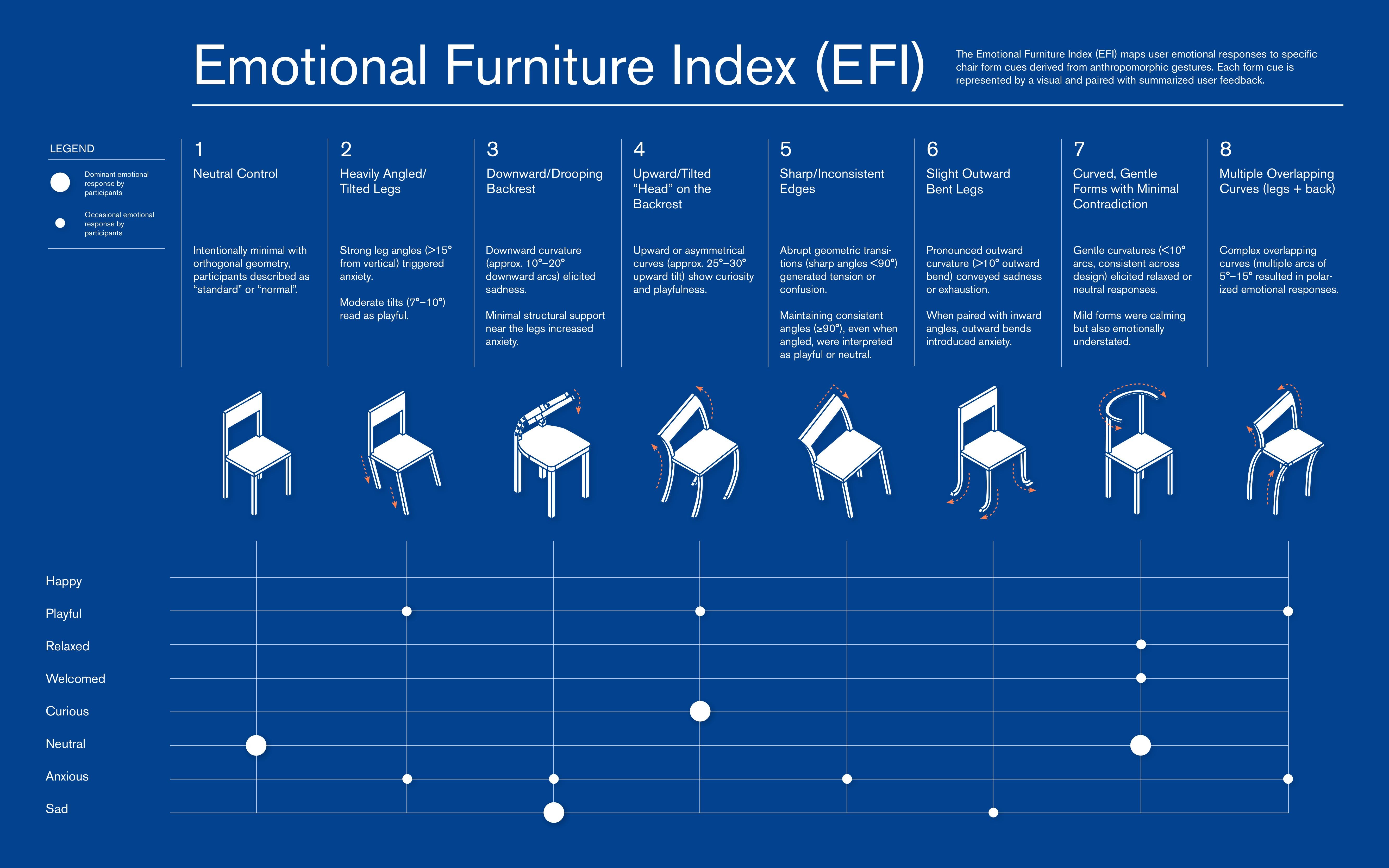
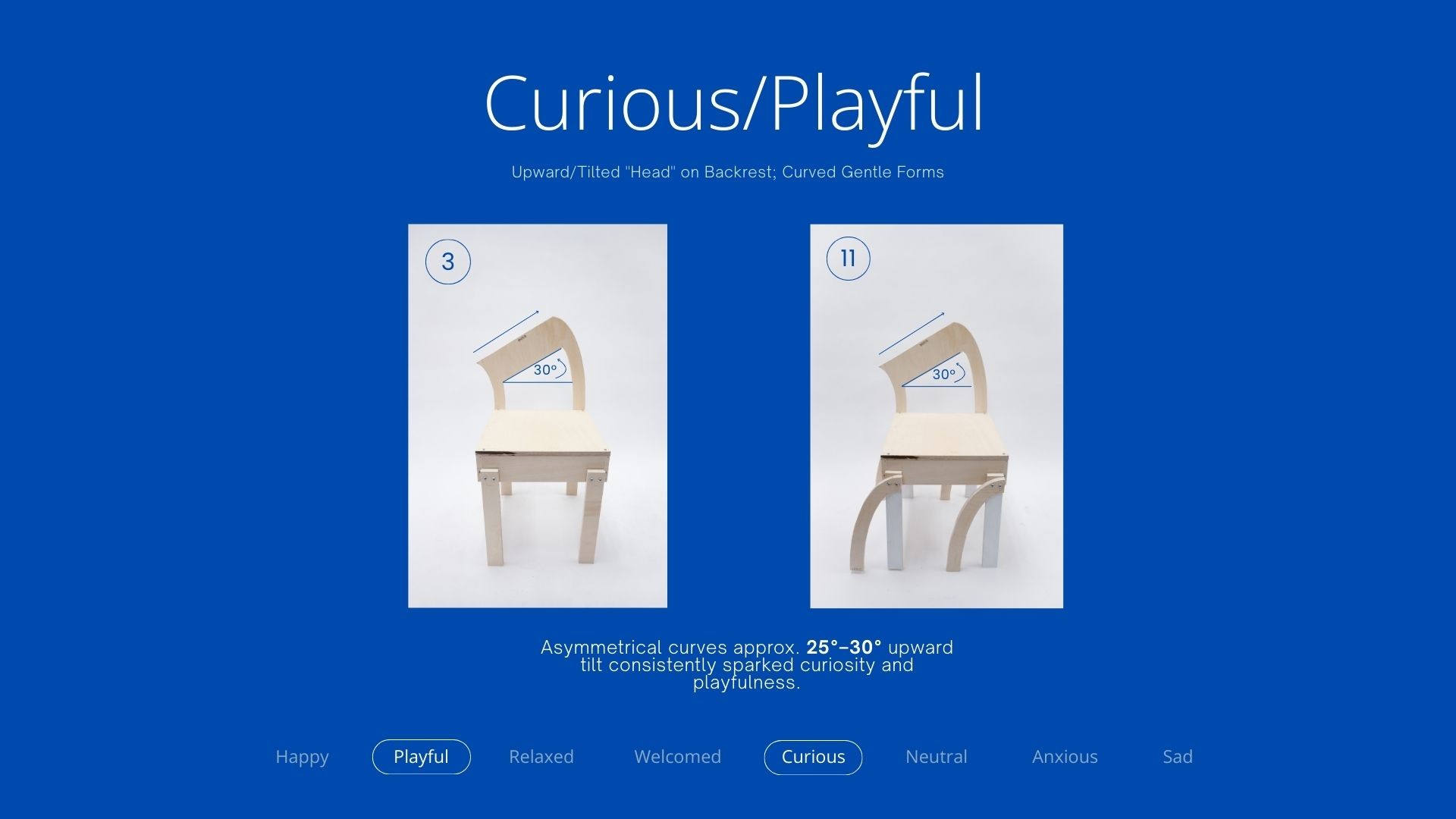
Upward or tilted backrests were consistently read as curious or playful
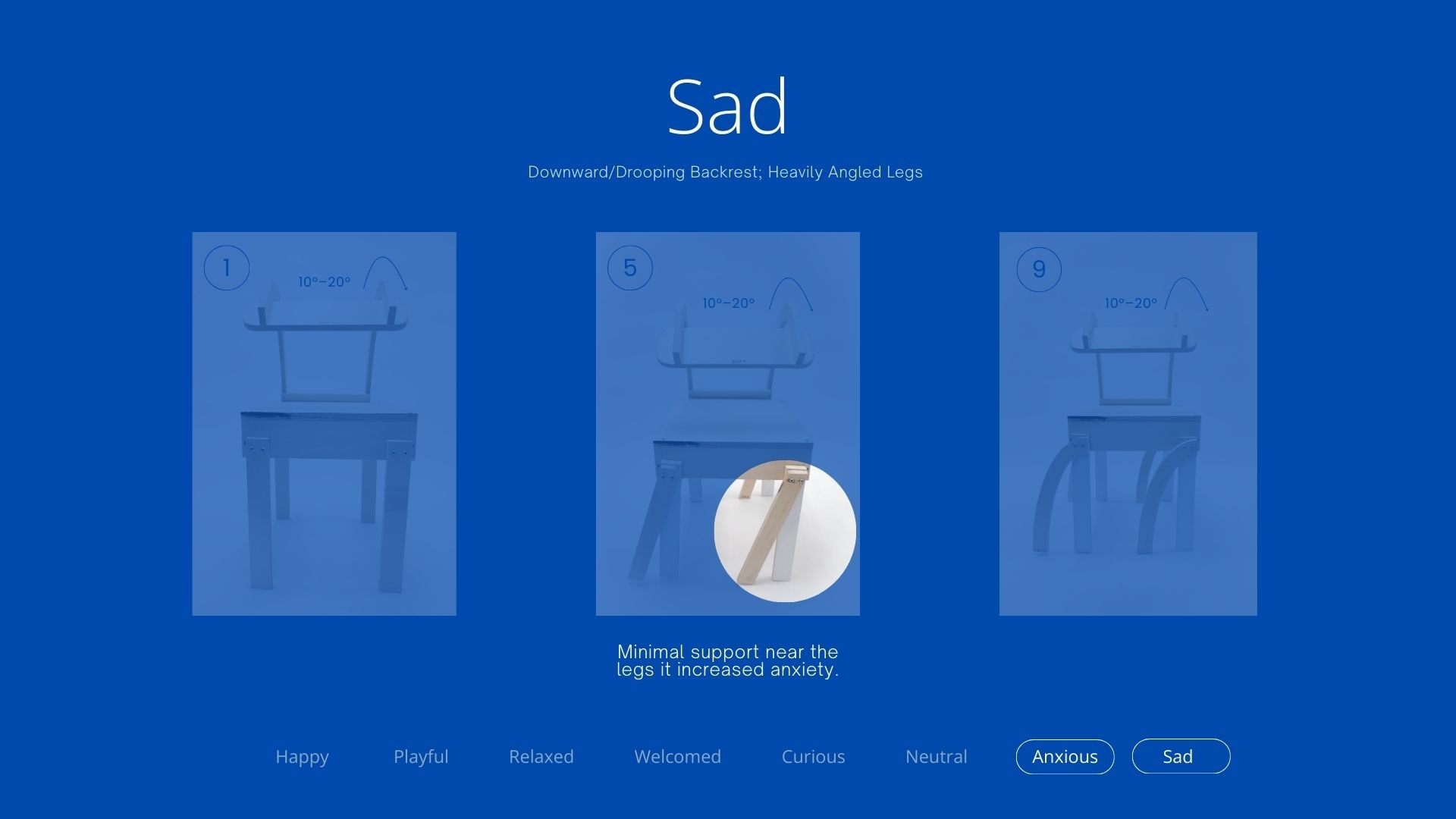
Downward or drooping forms reliably evoked sadness
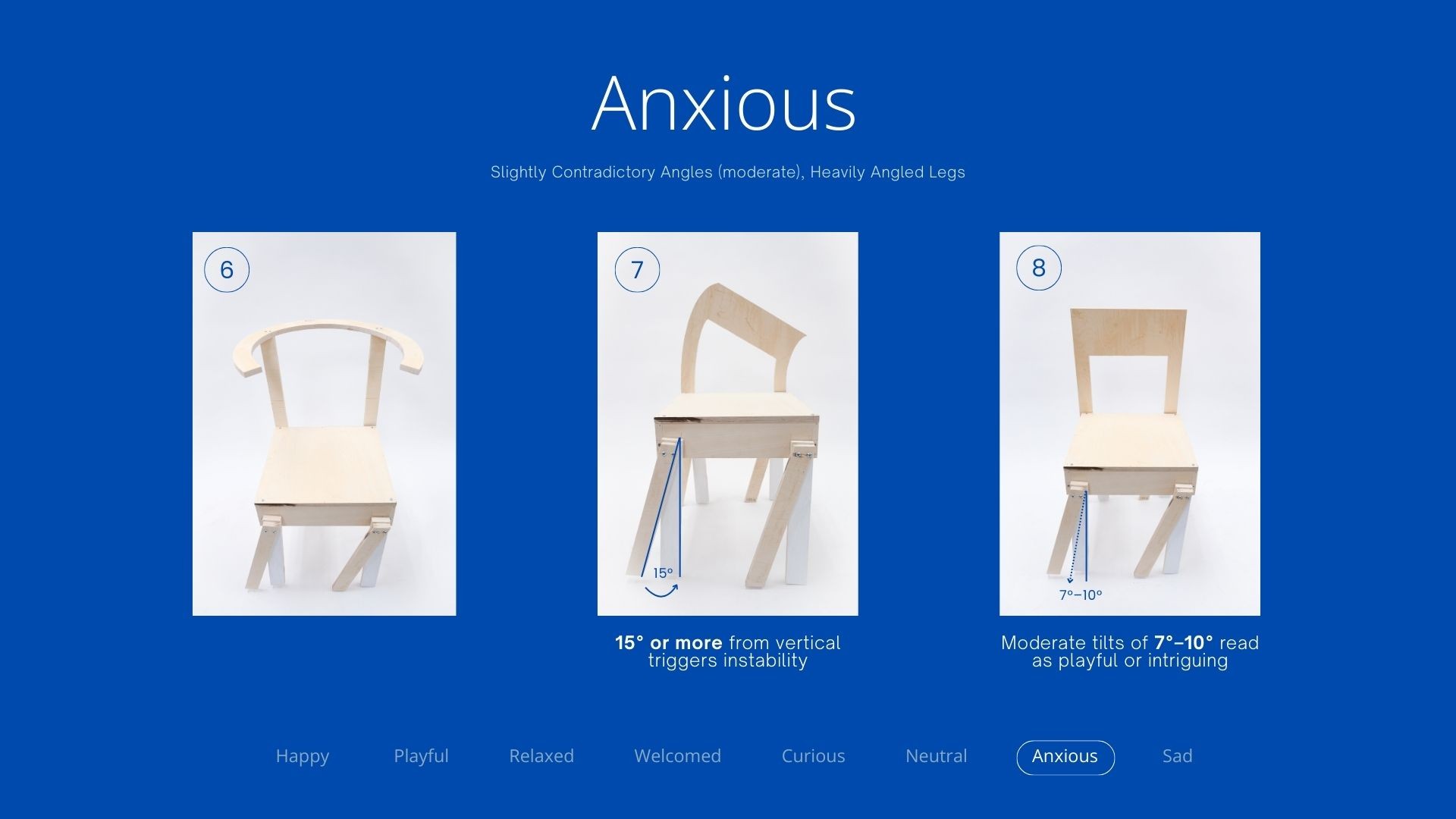
Leg angles exceeding ~15° from vertical triggered anxiety due to perceived instability
Direction of a curve mattered more than magnitude
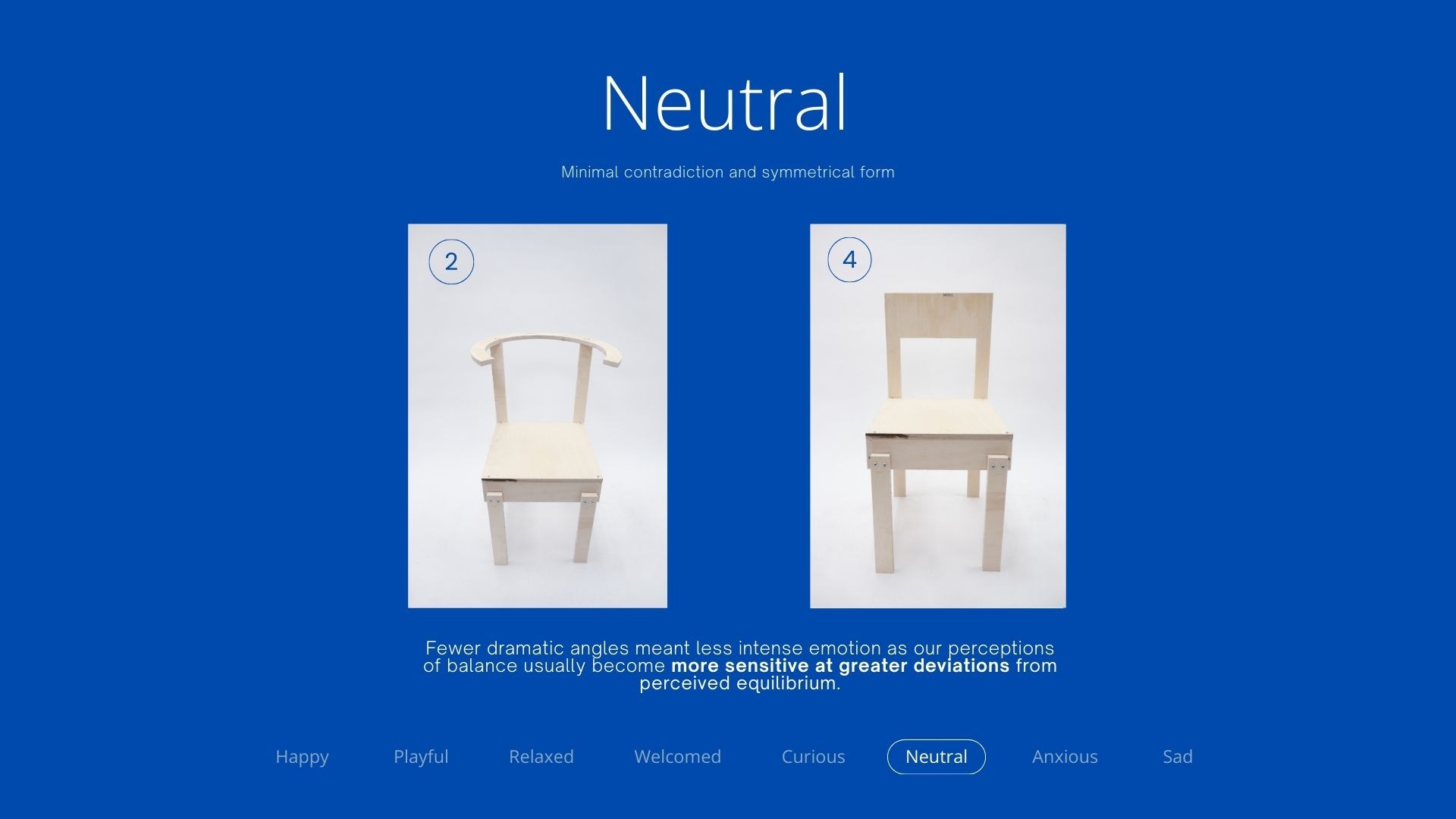
Emotional valence followed orientation, not intensity
Upward or tilted backrests were consistently read as curious or playful
Downward or drooping forms reliably evoked sadness
Leg angles exceeding ~15° from vertical triggered anxiety due to perceived instability
Direction of a curve mattered more than magnitude
Emotional valence followed orientation, not intensity
Despite a limited sample size, these reactions appeared across cultural backgrounds, suggesting baseline human tendencies rather than purely stylistic interpretation.
Despite a limited sample size, these reactions appeared across cultural backgrounds, suggesting baseline human tendencies rather than purely stylistic interpretation.
The Index
The Index
From Intuition to Usable Design Language
From Intuition to Usable Design Language
From Intuition to Usable Design Language
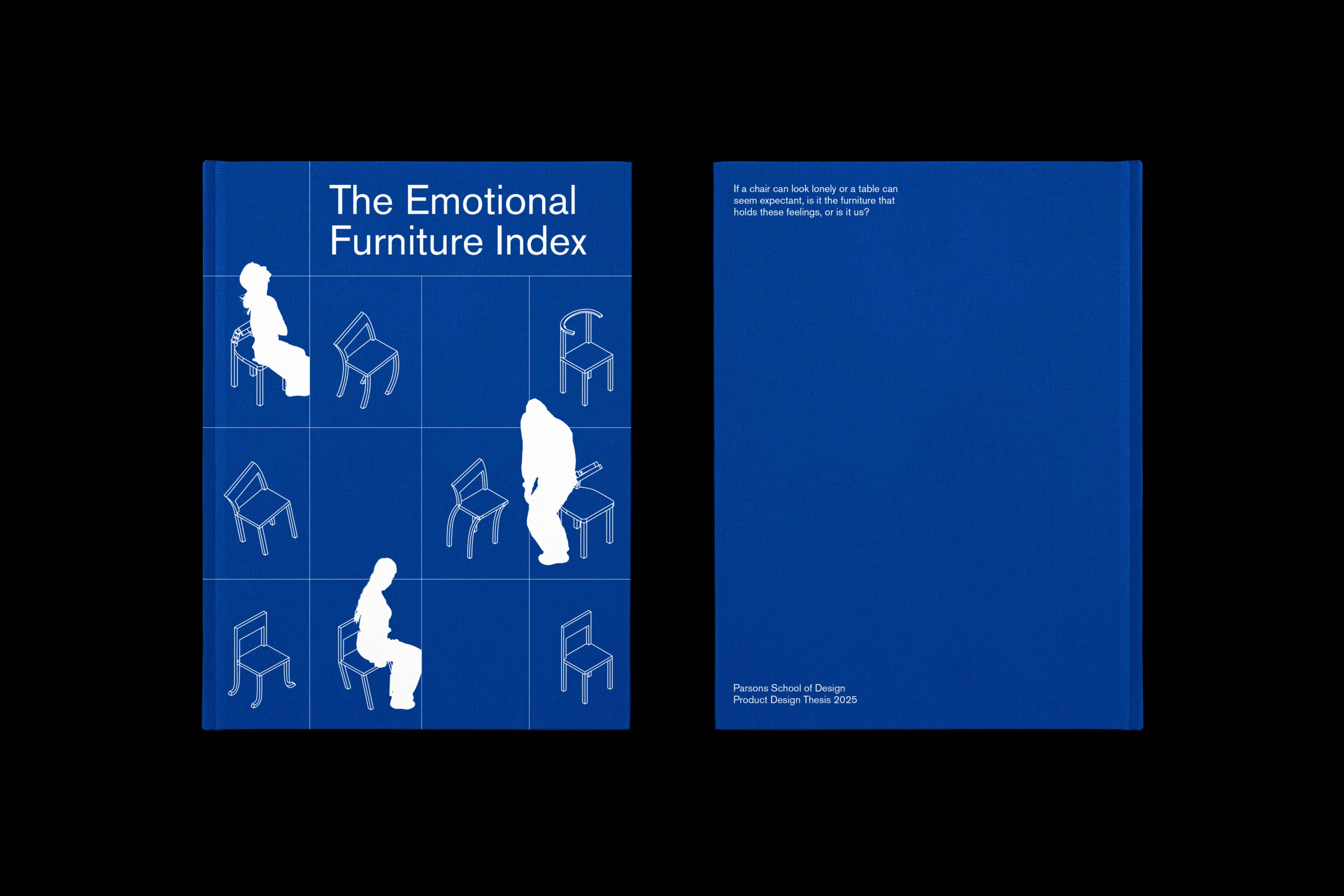
The Emotional Furniture Index distills these findings into a practical reference system linking formal cues to emotional readings.
The Emotional Furniture Index distills these findings into a practical reference system linking formal cues to emotional readings.
Rather than prescribing outcomes, the index functions as a design lens— helping designers move from vague intent (“make it feel welcoming”) to concrete decisions (“soften the backrest tilt” or “reduce leg divergence”).
Rather than prescribing outcomes, the index functions as a design lens— helping designers move from vague intent (“make it feel welcoming”) to concrete decisions (“soften the backrest tilt” or “reduce leg divergence”).
This framework allows emotional intent to be considered alongside ergonomics, rather than after the fact.
This framework allows emotional intent to be considered alongside ergonomics, rather than after the fact.
Proof of Concept & Impact
Proof of Concept & Impact
From Framework to Form
From Framework to Form
From Framework to Form
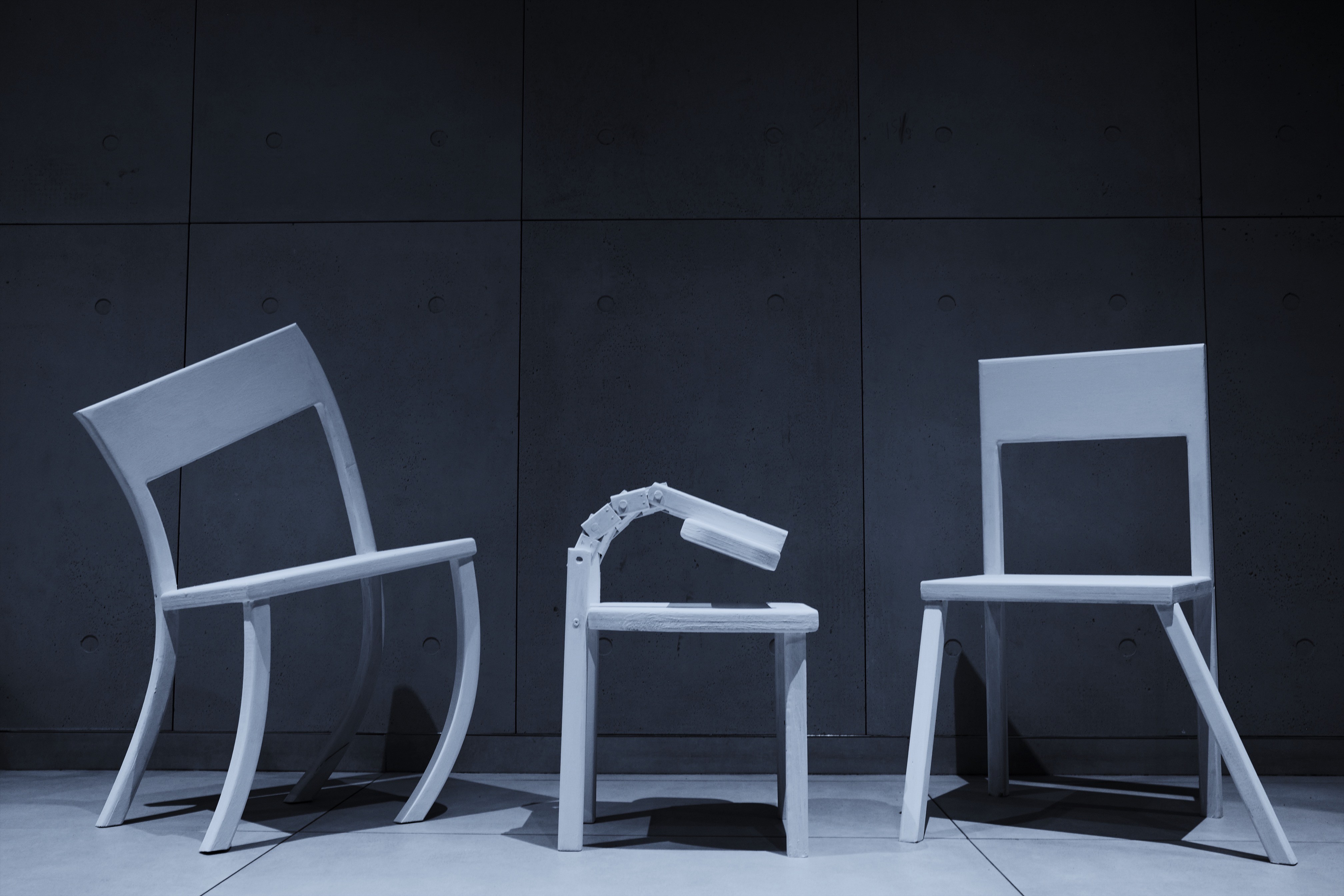
Three chairs were developed as proof-of-concept outcomes—Curious / Playful, Sad, and Anxious—each translating a distinct emotional state into structure. These pieces are not endpoints, but physical arguments: demonstrations of how abstract emotional intent can be made legible through form using the Emotional Furniture Index.
By separating emotional impact from ergonomics, the EFI reframes furniture as an expressive medium ratherthan neutral infrastructure. The framework enables more intentional emotional design, reduces trial-and-error in early prototyping, and supports stronger emotional attachment to objects— encouraging longevity and care.
This work continues to inform my ongoing explorations in anthropomorphic furniture, material experimentation, and body–object relationships.
Three chairs were developed as proof-of-concept outcomes—Curious / Playful, Sad, and Anxious—each translating a distinct emotional state into structure. These pieces are not endpoints, but physical arguments: demonstrations of how abstract emotional intent can be made legible through form using the Emotional Furniture Index.
By separating emotional impact from ergonomics, the EFI reframes furniture as an expressive medium ratherthan neutral infrastructure. The framework enables more intentional emotional design, reduces trial-and-error in early prototyping, and supports stronger emotional attachment to objects— encouraging longevity and care.
This work continues to inform my ongoing explorations in anthropomorphic furniture, material experimentation, and body–object relationships.
Further Inquiry
Emotional Furniture Index
Emotional Furniture Index
If you’re interested in exploring the complete research, methodology, and visual archive behind this project, I’m happy to share the full book documentation.
For access, questions, or continued conversation, please feel free to reach out.